
Zooming Out
and tripping out

In one of my past lives, I was a Sustainable Food and Farming major in the Plant and Soil Sciences Department at the University of Massachusetts Amherst. I moved to Western Mass from Boston after a transcendent experience visiting my friend Meryl’s farm. I realized I was desperate to move out of the city and into the country so I could learn how to grow things, or more specifically how to grow food.
In the fall of 2010, as part of the coursework for my degree, I took Plant Pathology with Professor Robert L. Wick in Fernald Hall. The building could have been the setting of a New England version of a John Hughes movie, it was so quaint.
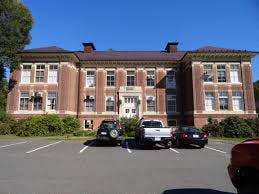
Plant Pathology is the study of plant disease, and just like I didn’t realize that a short visit with friends on a vegetable farm would change my trajectory, I also didn’t know that going into my first lab for Plant Pathology would shift the way I think about life and being alive on planet Earth.
The first lab began with labeling the parts of the Olympus CHBS compound microscope. We started with the basics: finding the power switch, coarse focus, fine focus, rheostat (which makes the light brighter or dimmer), etc. and moved on fairly quickly.
Then he informed us that our first lab would be the Oomycota Lab, also known as the lab where my brain exploded. Stick with me while I arm you with a few fun facts: Oomycota are soil-borne plant pathogens that are closely related to algae; they require lots of water to develop sporangia (a container that holds spores) which release swimming zoospores to spread the disease. Overwatering seed trays in a greenhouse or a flooded field in a wet spring are two conditions that make Oomycota go wild.
The Oomycota lesson also created a link in my brain to some of the symptoms I’d seen out in the field. This is what Oomycota does to plants in the field and in the greenhouse. If farmers see symptoms like these, they know their crops will take a hit:


Next we examined leaves from two different plants, one infected with downy mildew and one infected with powdery mildew.
This is where things started to get trippy.
As you may know, chlorophyll is the green pigment inside plant cells (held in these cute organelles called chloroplasts) that is an essential part of photosynthesis (how plants make food for themselves so they can grow) along with light, water, and CO2.
When Professor Wick passed around one small piece of infected leaf for each of us to clamp into the glass slide and examine under the microscope, I didn’t stop to think about the fact that we’d be giving those chloroplasts a huge hit of something they love: light. Light from the sun, light from a microscope; blast the cells of a leaf with either of these kinds of light, and they start to wiggle, move, and circle around in a cellular dance.
When I saw this happen under my microscope, I watched in amazement for a minute before pausing to look out the window. It was fall, so the leaves on the trees were brown and falling to the ground, but I imagined the trees covered in green leaves in the spring or summer.
As the sun rose in the morning each spring, the rays of light would hit each tree, each branch, each leaf on that branch, and each bundle of chloroplasts full of green chlorophyll inside just one corner of one leaf. The cellular dance would begin. The kinetic energy would rev up inside the chlorophyll of one leaf and another leaf and another leaf and another leaf until the entire tree, one of billions, would be buzzing from energy powered by the sun.
What if our human eyes had the ability to see not only a wide landscape but microscopic movement at the same time? What if we stepped outside and didn’t see just a tree with green leaves, but instead a tree with green leaves full of moving cells? Would we think we ingested a hallucinogen? Would we feel like we were living in a virtual reality simulation created by Mother Nature herself? Would it feel as if the entire world was vibrating with life? Because it is? Would we be able to go on about our daily lives with that wondrous activity happening right outside our windows?
And this was only happening inside leaves! We didn’t even get to the trunk of the tree, and don’t get me started thinking about the inside of the human body. Science brings us down to a level that is so microscopic and so granular that I can’t help but wonder: At what point, after going further and further into lessons and research and laboratory exercises, does a person throw their hands up and say, “And now we’ve reached the point of pure magic!” (Is this why I’m not a scientist?) All of this is alive and so are we. How is this even possible?
It makes me think of one of my favorite children’s books, ‘Zoom’ by Istvan Banyai. There are no words in ‘Zoom,’ only pictures, and here are the first four pages:


‘Zoom’ pulls back, back, back until we’re looking at planet Earth as a mere dot in the solar system, after starting on page one in one rooster’s comb.
I think of that piece of a leaf under my microscope every spring as I look up at the buds appearing on the branches. Even if we can’t see it with our naked eye, human beings can feel the inner workings of nature, one of many reasons why being in nature is so restorative. I also think of that leaf whenever I hear the word abundance. This planet teems with life from the peak of Mt. Kilimanjaro down to that piece of leaf under my microscope lens. I’m a part of this vast abundance, and so are you. No one gets left out, not one single person.
The end of January may not seem like the time to be thinking of spring, but it absolutely is because this is the time to plan a garden. I used to have a garden in our backyard, but the perimeter of our lot is edged with massive white pine trees, each as tall as a four story building, and they shaded out my garden plot and left my plants stunted. Then I signed up for a community garden plot through Chip’s work, spending summer afternoons weeding with two toddlers and hauling water to my plants via buckets sloshing around in the trunk of my van.
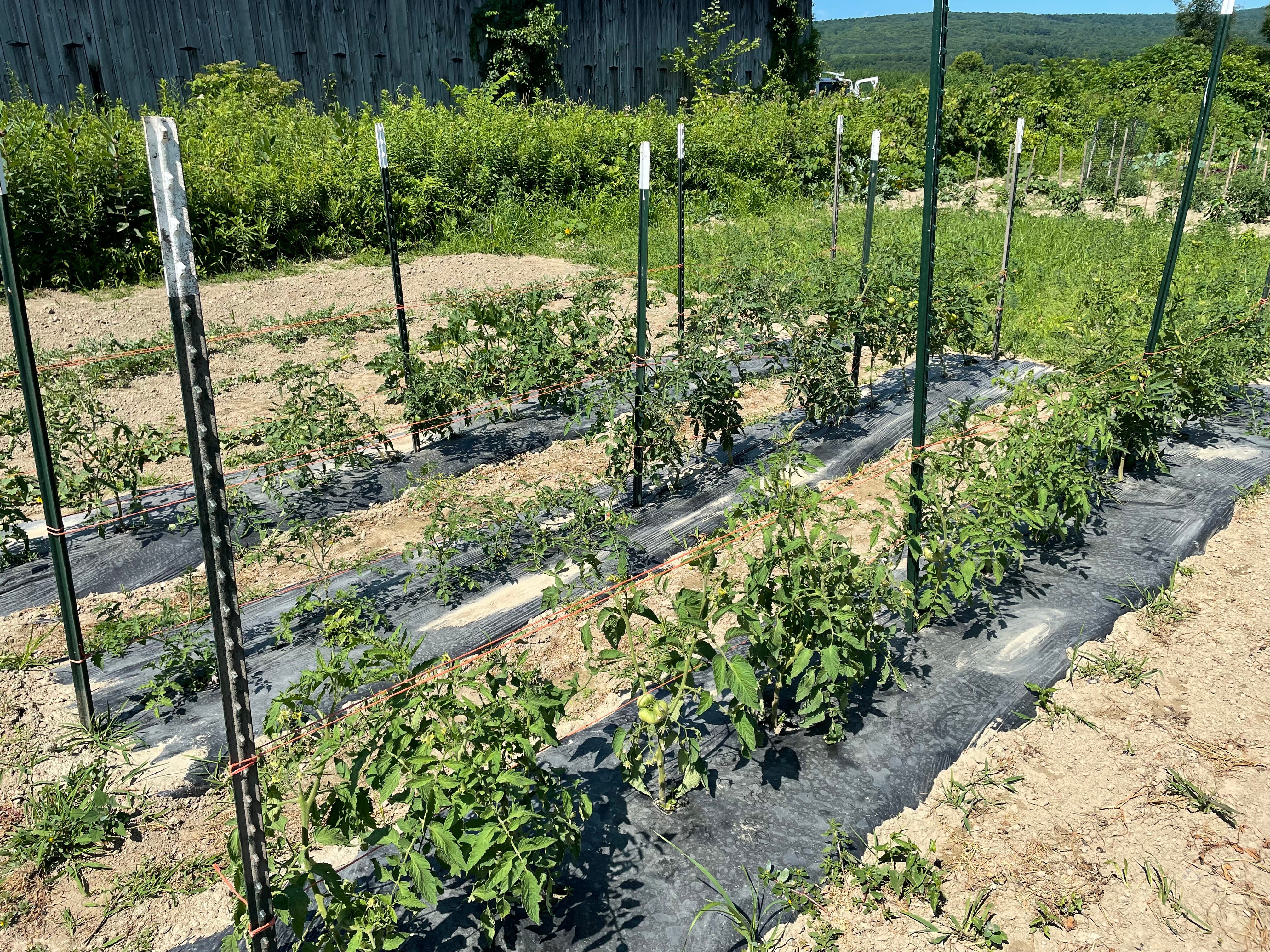
And zooming out even further, before that garden, I had The Small Farm. Chip owns a small piece of farmland on the same road as the sugarhouse, and the summer before our wedding, I set up a farm stand in a yellow shed where I sold the vegetables we grew on that plot of land. I even grew the vegetables for the epic meal at our wedding reception. I still have the laminated newspaper clipping from when our local paper came out to visit and do a story on the project:
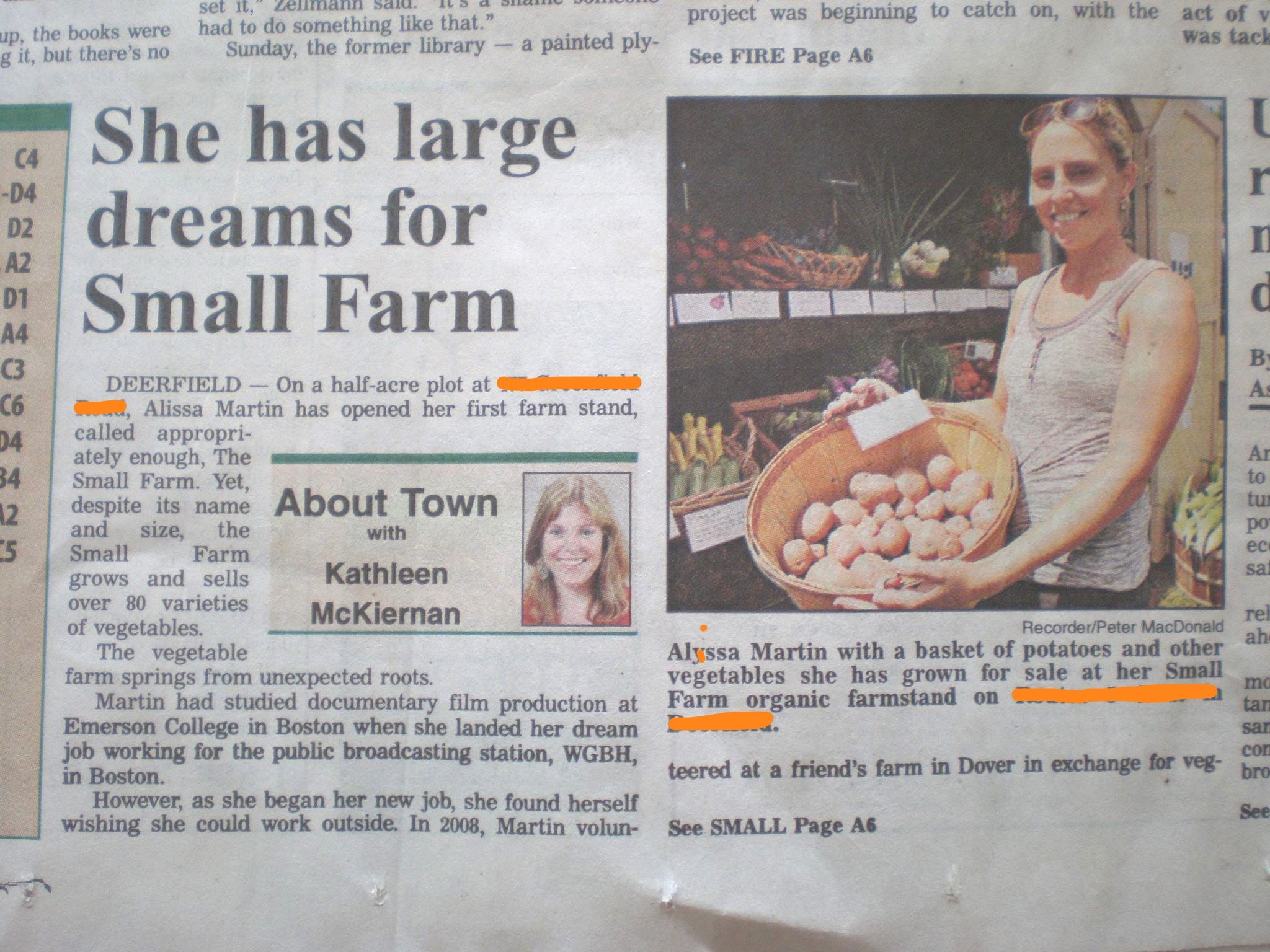
I grew over 80 varieties of different vegetables on The Small Farm, but as each year passed and with each new son born, my ambitions naturally got smaller and smaller. But at its peak, The Small Farm looked like this:


Fourteen years later, there’s still plenty of room to dabble and mess around, so this coming spring, I’ve decided to focus on growing flowers and herbs. I know how to grow vegetables en masse, and paradoxically enough, I have found staple crops frustrating to grow on a home garden scale (especially when I can support a local CSA). But I can tinker by growing specialty stuff, fancy stuff, the extras, the sprinkles on the cupcake. Now all I need is Chip’s cooperation as I’ll need to tear up a section of our front yard where I can get full sun!!!!!
If you want to join me by growing something this spring and summer, you can start by requesting some seed catalogs (or visiting their websites). Seed catalogs are basically plant porn and are also fantastic when used as wrapping paper. My favorites include:
Seed catalogs also make for great coffee table magazines and collage material. I also recommend ‘The Garden Primer’ by Barbara Damrosch as a reference for a general overview of vegetable, flower, and herb growing.


Let’s grow some stuff. Spring is on the way, I promise.
Thanks for reading.
XO
Alissa